
Artificial Turf Care: What You Can Do Yourself and When to Call a Pro
Artificial turf is one of the bigger outdoor investments a homeowner makes. New turf in Southern California commonly runs $8–$14 per square foot installed, so even a modest backyard is a several-thousand-dollar purchase. The good news: a simple routine keeps it looking and smelling good for years. Some of that routine you can handle yourself in about 30 minutes a week. Some of it is worth leaving to a professional.
Here’s exactly what to do, what to avoid, and how to tell when it’s time to call someone.
Your Weekly Routine (About 30 Minutes)
Pick up pet waste the same day. Solids left on turf break down into the infill and feed the bacteria that cause odor.
Rinse pet areas with a hose. Focus on the spots your dog uses most. A thorough rinse dilutes fresh urine before it dries into the infill. In summer, rinse more often.
Clear leaves and debris. A leaf blower on a low setting or a plastic rake works well. Leaves trap moisture and break down into the turf if they sit.
Your Monthly Routine (About 1.5 Hours)
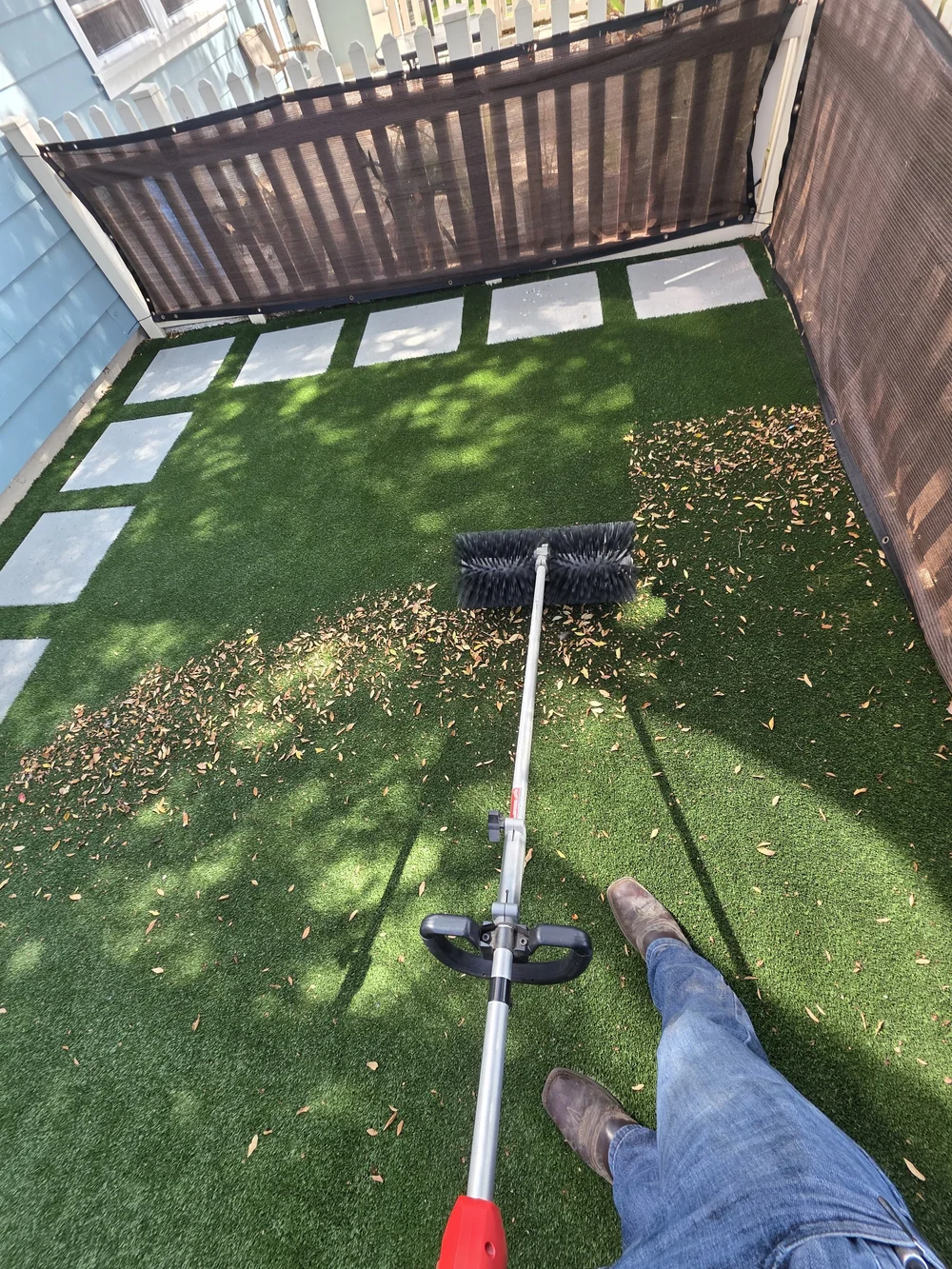
Brush high-traffic areas against the grain. Use a stiff broom with synthetic bristles, never a metal rake. Brushing stands blades back up and keeps paths from matting.
Check edges and seams. Look for lifting edges, separating seams or spots where infill has washed away.
Check your sprinklers. Make sure nearby sprinklers aren’t soaking the same patch of turf every day, which can slow drainage and encourage odor.
Do a “sniff test” on a warm afternoon. Heat brings urine odor up first, so it’s your early warning sign.
Your Total: About 3.5 Hours a Month
Four weekly sessions at about 30 minutes each, plus the 1.5-hour monthly routine, adds up to about 3.5 hours a month of hands-on care. That’s still far less than a natural lawn, but it’s real time. A turf care plan takes the brushing and deep cleaning off your list, so your part comes down to picking up after pets and a quick rinse.
Common DIY Mistakes to Avoid
Bleach and harsh chemicals. They aren’t safe for pets, and many turf manufacturers advise against them.
Relying on vinegar or scented sprays. They can mask odor for a few days, but they don’t break down the urine salts in the infill, so the smell comes back.
Pressure washing too close. A rented pressure washer held too close or at a steep angle can blow out infill and damage seams. If you use one, keep the pressure low and the nozzle moving.
Metal rakes and stiff wire brushes. They can pull or cut fibers.
Waiting until it smells. By the time you notice odor from across the yard, bacteria are well established below the surface.
Seasonal Care in Ventura County
Summer heat: warm afternoons intensify urine odor. Rinse pet areas more often from June through September.
Fall winds: Santa Ana winds drop leaves and debris across yards. Clear them quickly so they don’t break down into the turf.
Winter rain: rain doesn’t clean turf. It rewets dried urine in the infill, so odor often spikes after the first storms, and it carries mud and debris onto the surface. Brush afterward and watch for smell on the next warm day.
Coastal homes: in Oxnard and Ventura, marine-layer moisture keeps turf damp longer, which can hold odor. Regular enzyme treatment helps.
What’s Better Left to a Professional
Rinsing and brushing handle the surface. The bigger problems live below it. Dog urine settles into the infill and the backing, where a hose spreads it around instead of removing it. That’s why turf can look clean and still smell.
Enzyme odor treatment. Our Deep Clean + Enzyme uses pet-safe enzymes that break down urine compounds where the smell actually lives, then sanitizes and grooms the turf.
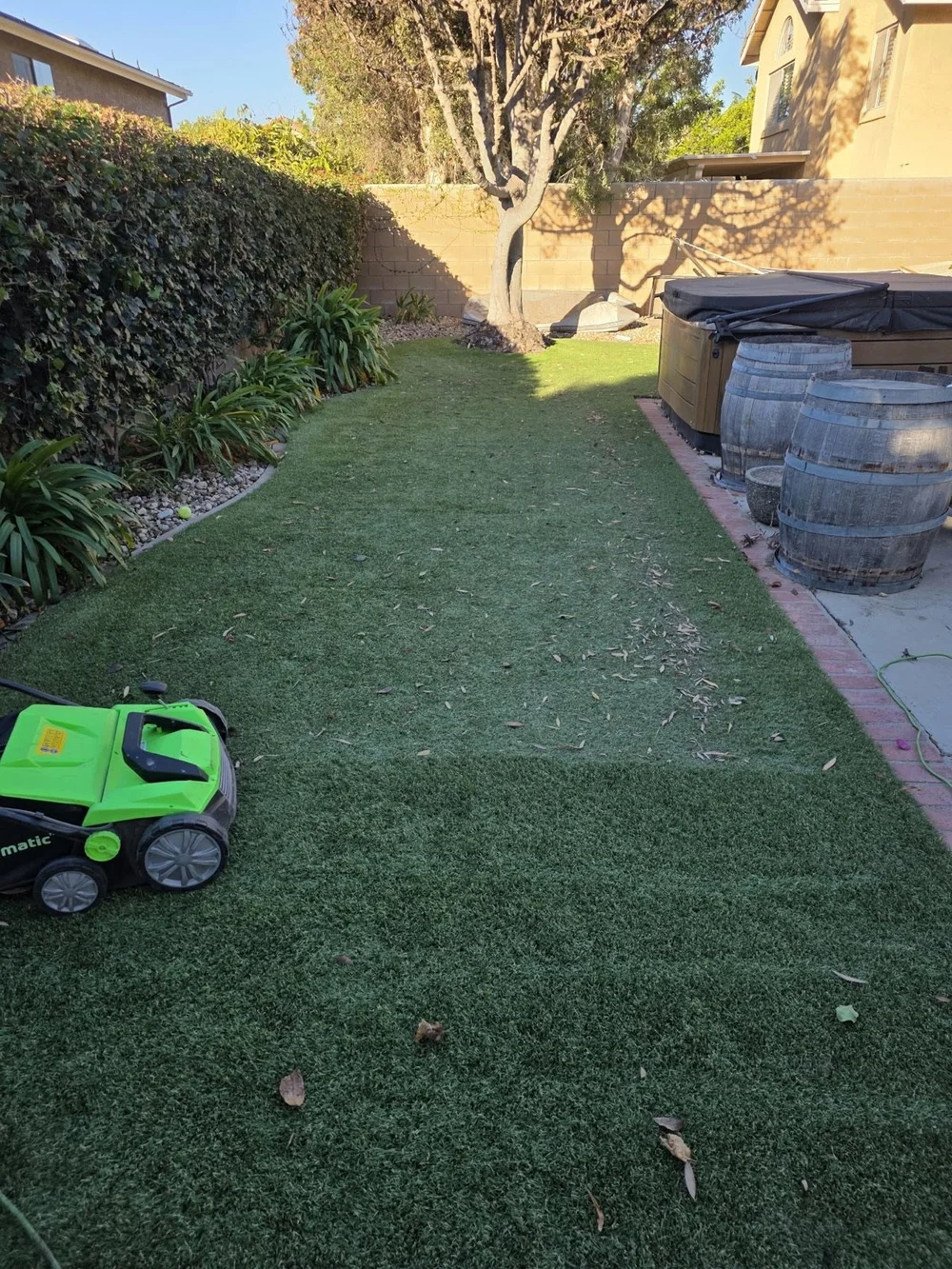
Power-brushing and vacuuming. Commercial equipment lifts matted fibers and pulls debris and pet hair out of the infill far better than a hand broom.
Deep extraction for long-term odor. When smell keeps coming back, a Deep Extraction Flush flushes the turf and backing and pulls the dirty water back out with an extraction machine.
Infill top-ups. Infill settles and washes out over time. Topping it up keeps blades upright and protects the backing.
Signs It’s Time to Call a Pro
Urine odor comes back within a day or two of rinsing.
Blades stay flat even after brushing.
You can see pet hair, dust or debris packed into the infill.
Water pools or drains slowly after rain or rinsing.
It’s been more than a few months since the last deep clean, and dogs use the turf daily.
A Simple Professional Schedule
Homes with dogs: a monthly Deep Clean + Enzyme keeps odor and bacteria from building up.
Turf without pets: a Brush & Vacuum every 2 months keeps it clean, upright and finished with a sanitizing spray.
Light-use yards: quarterly is usually enough.
On a turf care plan, your first visit is a one-time clean at the regular price, and every visit after that saves 10–20%. There’s no contract.
What Professional Cleaning Costs
For turf under 150 sq ft, a Brush & Vacuum starts at $155 and a Deep Clean + Enzyme starts at $195. Larger yards are priced by size, and 750 sq ft and up is priced per square foot. Calculate your price for your turf size, or read our full turf cleaning cost guide.
Frequently Asked Questions
How often should I rinse artificial turf?
Rinse pet areas at least weekly, and more often in hot weather or with multiple dogs. Turf without pets only needs a rinse when it looks dusty.
Can I use vinegar to clean artificial turf?
A diluted vinegar rinse can freshen the surface for a few days, but it doesn’t break down the urine salts in the infill. An enzyme treatment is what removes the source of the odor.
Is it safe to pressure wash artificial turf?
Only with care. High pressure aimed too close can blow out infill and damage seams. Low pressure kept moving is safer, and a power brush is usually more effective.
How long does a professional turf cleaning take?
Most residential yards take 1–2 hours. The turf is ready for pets and kids once it’s dry, usually the same day.
Do I need to be home?
No. As long as we can reach the yard and a hose spigot, you don’t need to be home.
The Bottom Line
Handle the weekly basics yourself, and let a professional handle what’s below the surface. That combination protects your investment for the lowest total cost. Get a free quote, or call or text (805) 754-7099 with a photo of your turf.