
Artificial Turf Is Low-Maintenance, Not No-Maintenance: Here’s Why
One of the biggest selling points of artificial turf is “no maintenance.” No mowing, no fertilizer, no watering the lawn. That part is true, and it’s a big reason turf is so popular across Ventura County. But no mowing isn’t the same as no care. Artificial turf is low-maintenance, not maintenance-free.
Here’s what really builds up in turf, why it matters more in homes with dogs, and the simple routine that keeps it looking and smelling the way it did on day one.
Myth vs. Reality
| The myth | The reality |
|---|---|
| “Turf never needs cleaning.” | Dirt, leaves and pet hair settle into the infill and need to come out. |
| “A good rain will clean my turf.” | Rain rewets dried urine in the infill, so turf often smells worse after it rains. |
| “Hosing it down washes urine away.” | Water spreads urine through the infill. Enzymes are what break it down. |
| “Turf doesn’t hold odor.” | Urine salts and bacteria in the infill and backing are the source of turf odor. |
| “It stays fluffy forever.” | Foot traffic and pets flatten blades. Brushing stands them back up. |
| “Turf is maintenance-free.” | Turf is low-maintenance: about 30 minutes a week of basic care plus periodic professional cleaning. |
Myth: “The Rain Will Clean It”
This is the one we hear most, and it’s the one that surprises people. After the first good storm of the season, many Ventura County homeowners notice their turf smells worse, not better.
Here’s why. When urine dries in turf, it leaves salts and bacteria in the infill and backing. Dry, that buildup is fairly quiet. Rain rewets it, reactivating the salts and giving bacteria the moisture they need to grow, so the ammonia smell comes right back up. Rain also isn’t strong enough to flush buildup out of the backing. It moves it around, and puddles that sit in low spots or along edges hold the smell even longer. Then the first warm, sunny day after the storm bakes it.
Rain does rinse dust off the blades, which is why turf can look cleaner after a storm while smelling worse. If your yard smells after rain, that’s a sign of buildup below the surface.
Why Our Enzyme Treatment Works With the Wet Season, Not Against It
The same moisture that wakes up urine odor is what our enzyme treatment needs to do its job. The professional-grade enzymes we use are active in damp turf. Moisture carries them down into the infill and backing, right where the buildup sits, and keeps them working there.
Once there, the enzymes break down the urine compounds that odor-causing bacteria feed on. Take away their food source and the smell goes with it, instead of being covered up with fragrance. That’s why a wet-season enzyme clean is so effective, and why scheduling one in the fall, before the first storms, keeps the post-rain smell from showing up at all.
What Builds Up in Artificial Turf
Pet urine. Urine soaks past the blades into the infill and backing. A hose spreads it around, and the bacteria that cause odor keep growing.
Debris and pet hair. Leaves, dust and hair settle into the infill, where they hold moisture and dull the look of the turf.
Matting. Foot traffic, play and pets press the blades flat over time, especially along paths and favorite spots.
Bacteria. Warm temperatures, moisture and organic matter are an ideal mix for bacteria, which is why turf often smells worst in summer.
Turf vs. Natural Grass: The Real Comparison
Artificial turf still wins on upkeep. Compare a typical year:
Natural grass: weekly mowing in season, edging, fertilizing, weed control, regular irrigation and reseeding bare spots.
Artificial turf: no mowing, fertilizer or lawn watering. About 30 minutes a week to pick up after pets, rinse and clear leaves, a monthly brushing, plus a professional deep clean on a schedule.
That’s a fraction of the time and water. It just isn’t zero.
Why It Matters More With Dogs
In natural grass, soil and microbes break urine down over time. Artificial turf doesn’t have that. Urine stays in the infill until something removes it. With one or more dogs using the same spots every day, odor can build within weeks, especially in summer.
Multi-dog homes
Two or three dogs means two or three times the urine in the same few spots. These homes usually notice odor first and need the most consistent care. A monthly Deep Clean + Enzyme keeps it under control, and a Deep Extraction Flush resets turf where odor has built up for years.
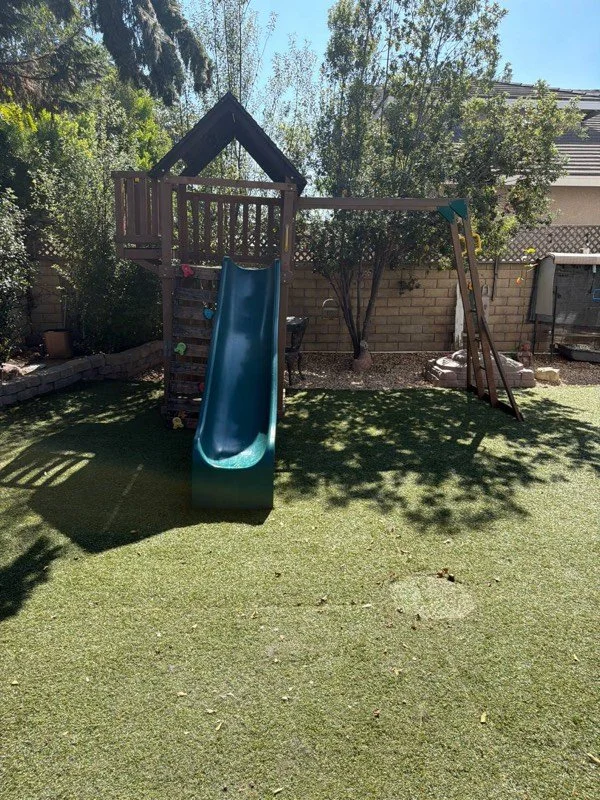 Before
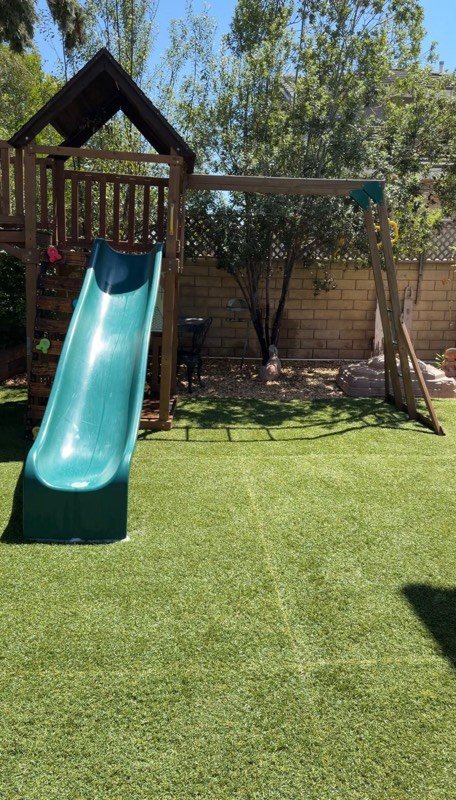 After
What Happens If You Skip It
Turf that goes a year or two without a deep clean tends to follow the same pattern: a faint smell on hot days, then a smell you notice from the patio, flattened paths, a dull, dusty look and sometimes slower drainage. Many homeowners assume it’s worn out and start pricing replacement, when a deep clean would have restored it. Read how to tell if your turf needs replacing or just cleaning.
What “Low-Maintenance” Actually Looks Like
Weekly: pick up pet waste, rinse pet areas and clear leaves.
Monthly: brush high-traffic areas against the grain.
Professional: a monthly Deep Clean + Enzyme for homes with dogs, or a Brush & Vacuum every 2 months for turf without pets.
For the full do-it-yourself routine, see what you can do yourself and when to call a pro.
Frequently Asked Questions
Is artificial turf really low-maintenance?
Yes. It needs no mowing, fertilizer or lawn watering. It does need regular rinsing, brushing and periodic professional cleaning, especially with pets.
How often does artificial turf need professional cleaning?
Most homes with dogs do best monthly. Turf without pets does well every 2 months, and light-use yards quarterly.
Why does my turf smell worse after it rains?
Rain rewets dried urine salts and bacteria in the infill and backing, which brings the odor back. It isn’t strong enough to flush them out. An enzyme deep clean breaks down the urine compounds that feed the odor, and our enzymes work best in damp turf, so it’s effective through the rainy season.
Why does my artificial turf smell?
Urine soaks into the infill and backing, where bacteria grow and release odor, especially in heat. Rinsing alone doesn’t remove it; enzyme treatment does.
Does artificial turf need water?
Not for growth. An occasional rinse keeps pet areas fresh and cools the surface on hot days.
Make It Easy
A turf care plan takes the work off your list. Your first visit is a one-time clean at the regular price, every visit after that saves 10–20%, and there’s no contract. You don’t need to be home as long as we can reach the yard and a hose spigot.
Calculate your price, get a free quote, or call or text (805) 754-7099.