
Thinking About Replacing Your Artificial Turf? Try a Deep Clean First
If your artificial turf smells, looks flat or just seems worn out, replacing it can feel like the only fix. We hear it every week: “I think we need new turf.” Before you spend thousands, it’s worth knowing that most of those problems live in the infill and backing, not in the turf itself. In many cases a deep clean brings it back.
Here’s how to tell whether your turf can be restored, what replacement really costs, and what a restoration clean involves.
The Cost Difference
New artificial turf in Southern California commonly runs about $8–$14 per square foot installed. A professional Deep Clean + Enzyme costs a small fraction of that:
| Yard size | Deep Clean + Enzyme | New turf (installed, est.) |
|---|---|---|
| 150 sq ft | $195 | $1,200–$2,100 |
| 400 sq ft | $275 | $3,200–$5,600 |
| 600 sq ft | $330 | $4,800–$8,400 |
| 1,000 sq ft | about $520 | $8,000–$14,000 |
Even a Deep Extraction Flush for heavy, long-term odor, which is quoted separately, is a fraction of replacement.
How Long Should Artificial Turf Last?
Quality artificial turf is commonly expected to last 10–20 years, depending on the product, sun exposure and how much use it gets. If your turf is only a few years old and already looks or smells bad, that’s almost always a cleaning problem, not a worn-out turf problem.
Can Your Turf Be Restored? A One-Minute Checklist
If you answer “yes” to these, a deep clean will likely fix it:
It smells like urine, especially on hot days. That’s bacteria and urine salts in the infill, which enzymes and extraction can remove.
The blades are matted or flat. Power-brushing stands them back up.
It looks dull or dirty. Debris, dust and pet hair packed into the infill come out with a brush and vacuum.
Drainage seems slower than it used to. Built-up debris can slow drainage, and a deep clean often helps.
The backing feels solid and the seams are intact.
Signs It May Really Be Time to Replace
Torn seams or holes that can’t be repaired.
Melted or burned fibers, often from sunlight reflected off windows.
A failed base, with dips, sinking or standing water that never drains.
Backing that is brittle or crumbling after many years in the sun.
Bald spots where the fibers have worn down to the backing.
If you’re not sure which group your turf falls into, send us a photo. We’ll tell you honestly whether cleaning will fix it.
Why Turf Starts to Smell, and Why That’s Fixable
Turf odor almost never means the turf itself is ruined. When dogs use the same spots day after day, urine drains past the blades into the infill and the backing. As it dries, it leaves salts behind, and bacteria feed on them. Every rinse, rain or warm afternoon reactivates that buildup, which is why the smell keeps coming back no matter how often you hose it down.
The fibers on top are usually fine. The problem is what’s trapped underneath, and that can be broken down with enzymes or flushed out with extraction. Replacing the turf removes the buildup too, but at many times the cost, and the new turf will start collecting the same buildup the day your dog first uses it.
A Real Restoration
This fenced backyard is a typical example. The turf looked matted and tired, and the homeowners were starting to think about replacing it. One deep clean later, the blades are standing up, the color is back and the yard is groomed into fresh stripes.
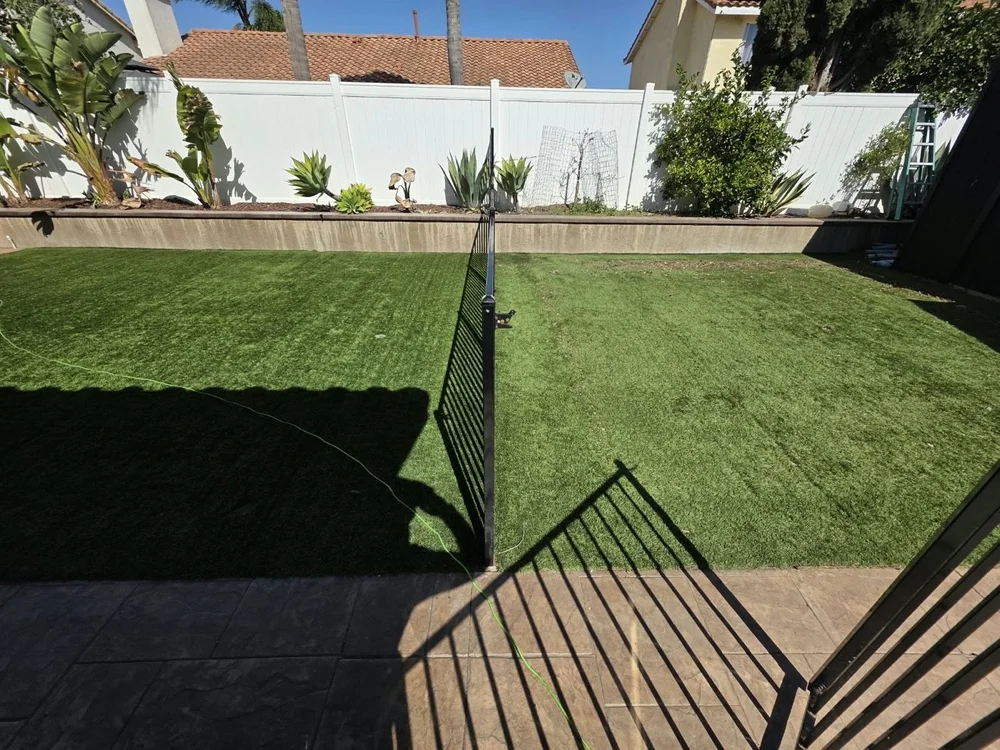 Before
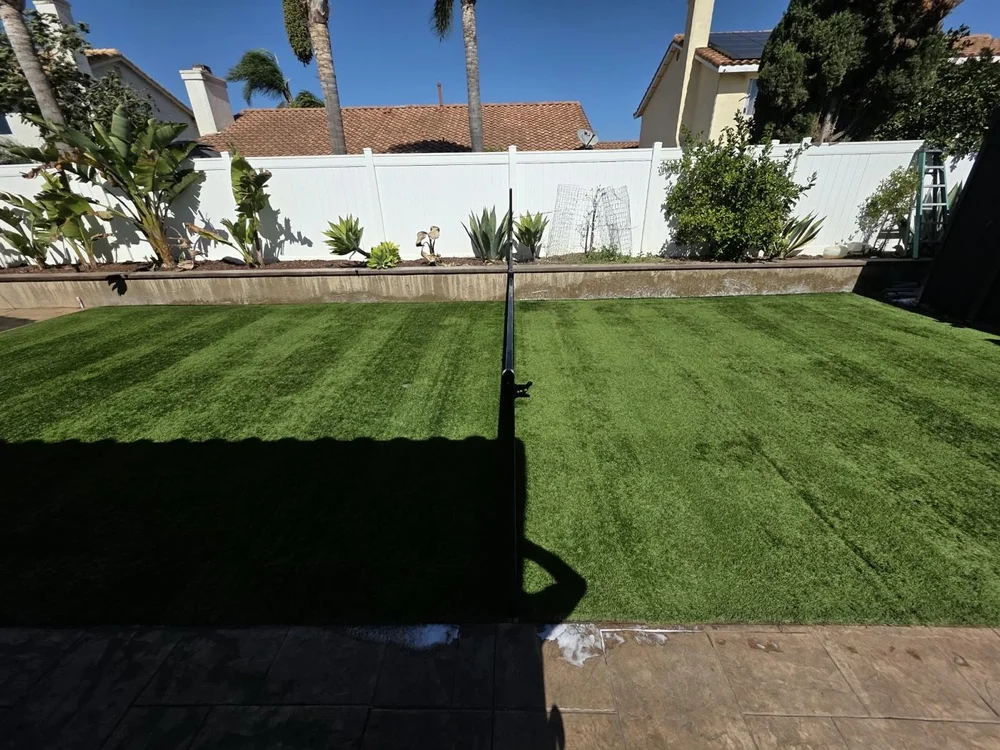 After
Another yard, this one under a gazebo, had flattened turf and built-up debris. A power-brush and deep clean brought it back without replacing a single square foot.
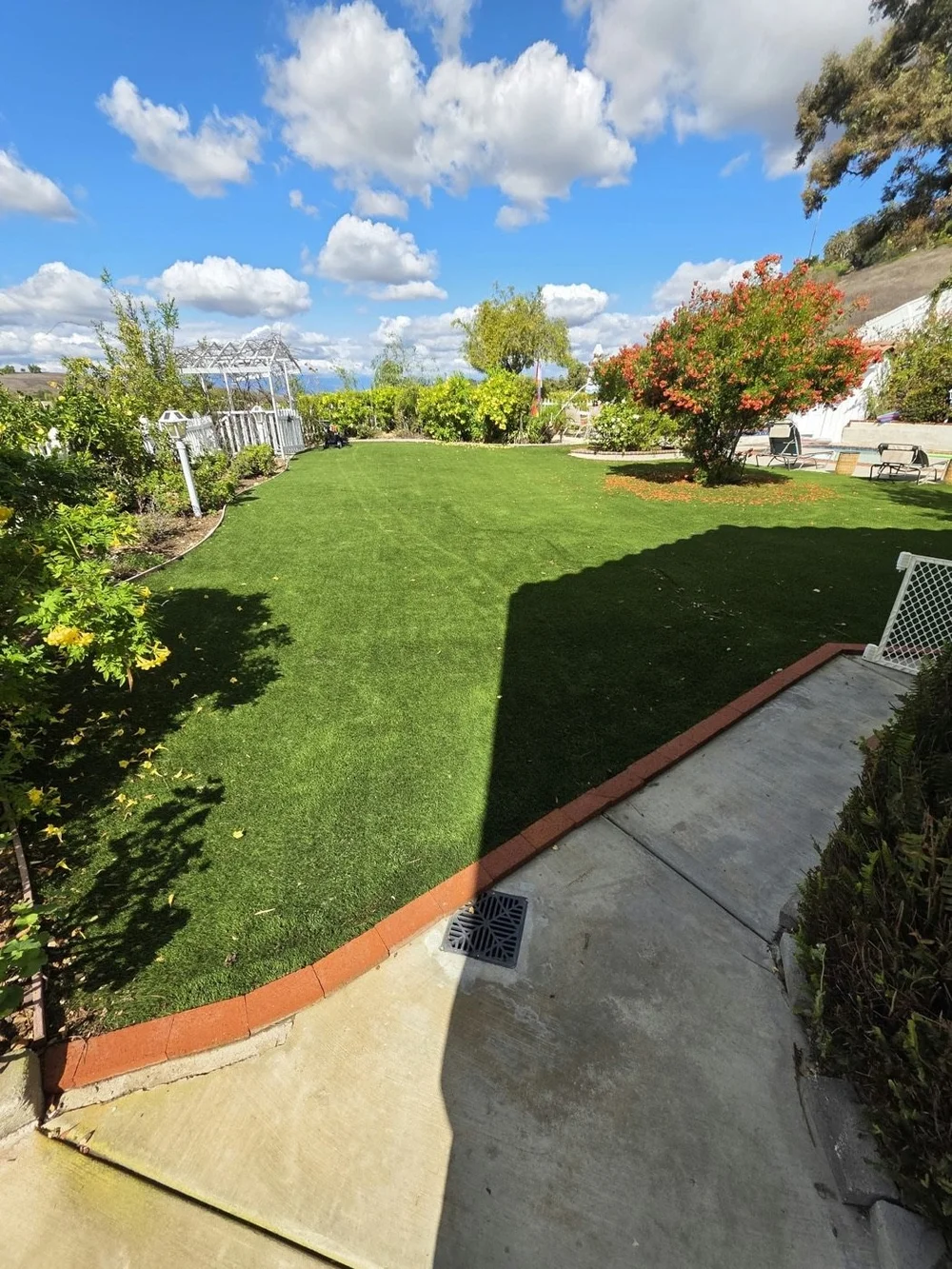 Before
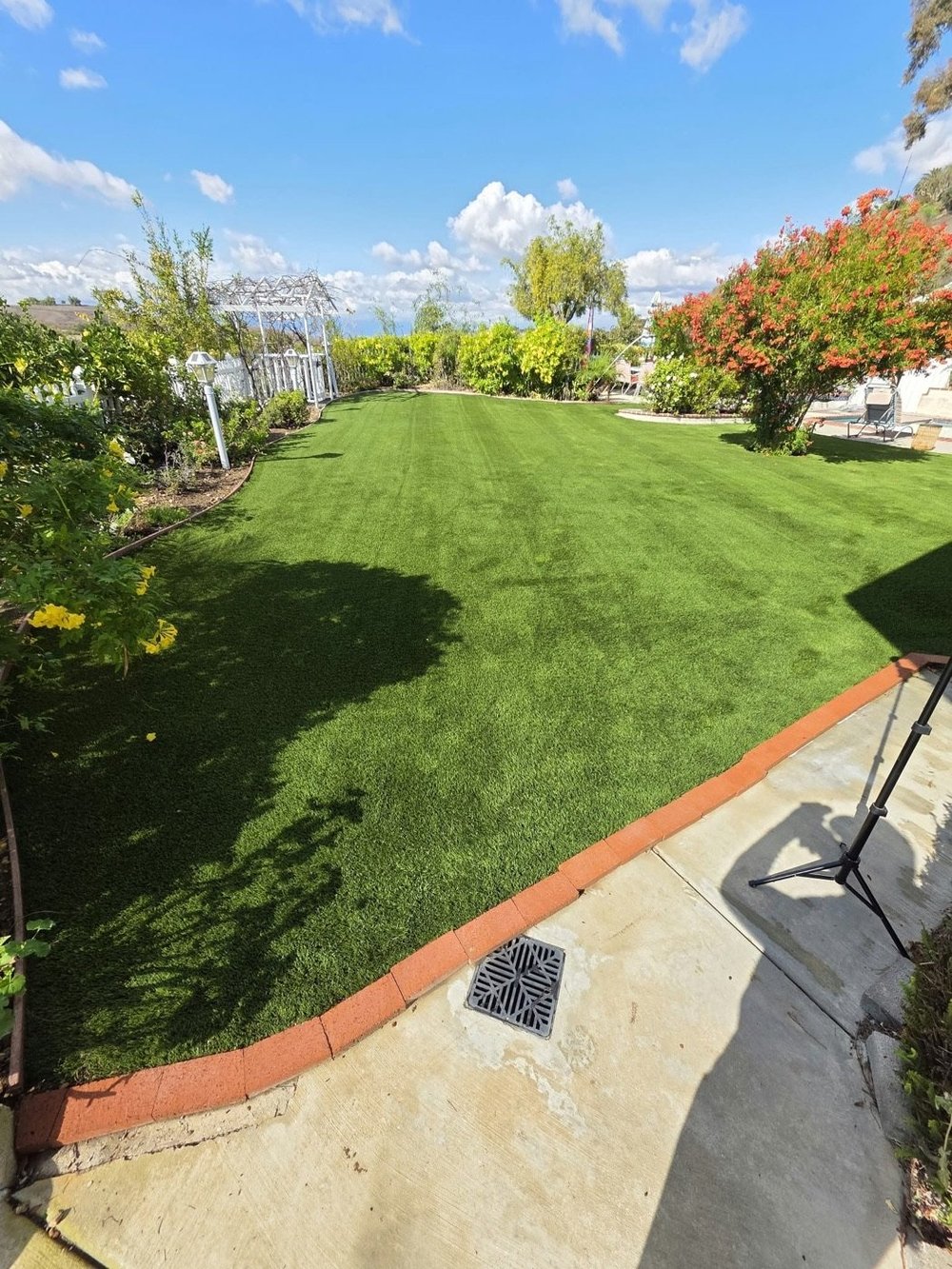 After
What a Restoration Clean Includes
Debris removal and power-brushing to pull out leaves, hair and dust and stand matted fibers back up.
Enzyme treatment that breaks down urine where the smell lives, in the infill and backing.
Sanitizing and grooming to finish.
Deep Extraction Flush for strong odor that keeps coming back: we flush the turf and backing and pull the dirty water out with an extraction machine.
Infill top-up if the infill has thinned, to keep blades upright and protect the backing.
Keeping It From Coming Back
Once your turf is restored, a regular schedule keeps it that way. Most homes with dogs do best on a monthly deep clean, and turf without pets does well with a Brush & Vacuum every 2 months. Our turf care plans save 10–20% per visit after your first clean, with no contract.
Frequently Asked Questions
Can a deep clean really fix turf that smells like urine?
In most cases, yes. The smell comes from urine and bacteria in the infill and backing, which enzyme treatment breaks down. For years of buildup, a Deep Extraction Flush pulls it out.
Will cleaning fix flat, matted turf?
Usually. Power-brushing stands the blades back up, and an infill top-up helps them stay upright.
How do I know if my turf is too damaged to save?
Torn seams, melted fibers, bald spots or a sinking base are signs of replacement. Odor, matting and dirt are signs of cleaning. Send us a photo and we’ll tell you which.
How long does a restoration clean take?
Most residential yards take 1–2 hours. Your turf is ready for pets and kids once it’s dry, usually the same day, and you don’t need to be home if we can reach the yard and a hose spigot.
How much does it cost to restore artificial turf?
A Deep Clean + Enzyme starts at $195 for turf under 150 sq ft. Calculate your price for your size. A Deep Extraction Flush is quoted separately.
Get an Honest Answer
Before you replace your turf, get a free quote or text a photo to (805) 754-7099. If cleaning won’t fix it, we’ll tell you.