
In Ventura County, most of our rain falls between November and March. After a long, dry summer and a windy fall, that first storm hits a yard full of buildup: dust and oil on the driveway, leaves packed into the turf, mildew in the shady corners and months of pet urine in the infill. Rain doesn’t wash most of that away. It stirs it up.
A little prep in October and November keeps your yard clean, safe and fresh-smelling all winter. Here’s what to do, area by area.
Why the First Storm Matters
Everything that settles on your yard during the dry months sits there until the rain comes. The first storm of the season turns dust into mud, makes oil stains spread and slick, and rewets dried urine in artificial turf. That’s why many homeowners notice their turf smells worse after the first rain, not better. We cover why in Artificial Turf Is Low-Maintenance, Not No-Maintenance.
Artificial Turf
Clear leaves and debris. Santa Ana winds leave yards covered in leaves. Wet leaves break down into the infill and hold moisture against the backing, so clear them before the rain.
Get an enzyme deep clean before the first storm. Breaking down urine buildup now keeps the post-rain smell from showing up. Our Deep Clean + Enzyme enzymes stay active in damp turf, so a clean during the wet season works well too.
Check drainage. Look for low spots, edges where water pools and areas that stayed wet last winter. Slow drainage is often caused by debris packed into the infill, which a deep clean helps.
Point downspouts away from the turf. A downspout that empties straight onto turf keeps the same spot soaked all season.
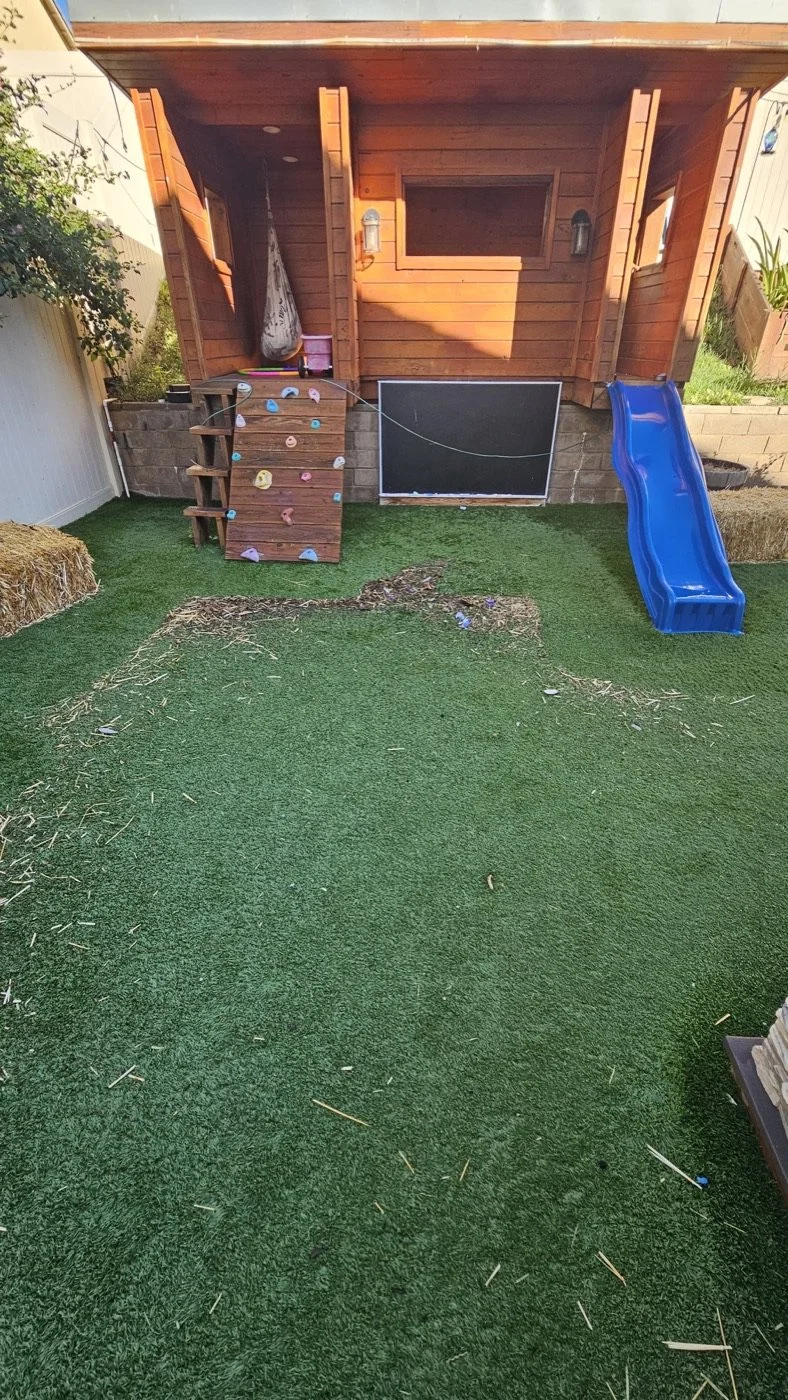 Before
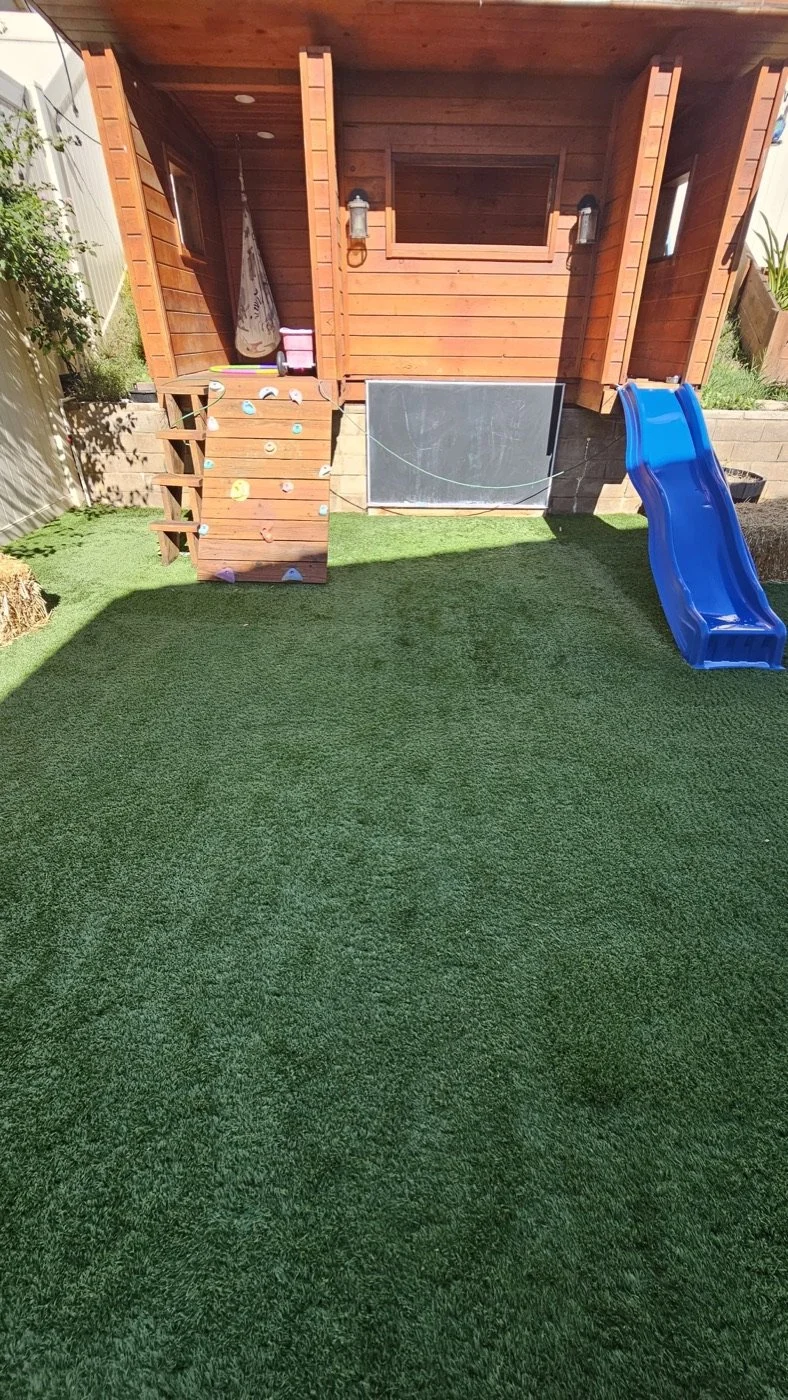 After
Driveways, Walkways and Patios
Clean off mildew and algae. Shady walkways and north-facing patios grow a green or black film that turns slippery when wet. Removing it before the rain is a real safety step, especially on steps and entryways.
Lift oil and tire stains. Rain spreads oil across the driveway and into the street. Pressure washing before the season gets it up while the concrete can dry.
Seal on dry days. If you plan to seal concrete or pavers, do it before the rain starts so the sealer can cure.
Our pressure washing handles driveways, sidewalks, patios, fences and home exteriors, and we schedule around the weather between storms.
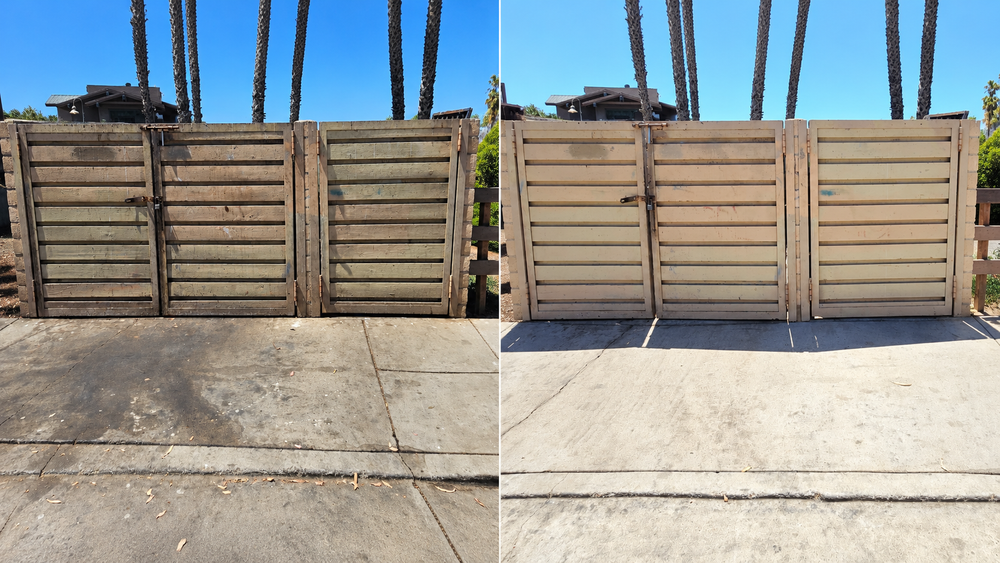
Fences, Gates and Outdoor Wood
Wood holds moisture. Dirt and mildew left on fences, gates and pergolas soak up winter rain and stay damp longer, which speeds up graying and rot. A gentle cleaning in the fall gives the wood a chance to dry out between storms.
Trash Bins
Rain gets into bins, mixes with whatever is left in the bottom and sits there. On the next warm day, that turns into a strong smell and attracts flies. Keep lids closed, rinse bins after pickup when you can, and consider a bin cleaning to sanitize and deodorize them before the season.
Gutters and Downspouts
Clear gutters before the first storm, especially after fall winds. Clogged gutters overflow onto walkways and turf, and make sure downspouts drain away from your foundation, patio and turf.
Keep Wash Water Out of the Storm Drain
If you clean anything yourself, keep dirty wash water, soap and debris out of the gutter. Storm drains in Ventura County carry water to creeks and the ocean without treatment, so sweep debris up instead of hosing it into the street.
Your Pre-Rain Checklist
Clear leaves and debris from turf, patios and gutters.
Book an enzyme deep clean for turf that dogs use.
Pressure wash shady walkways, steps, the driveway and the patio.
Point downspouts away from turf, patios and the foundation.
Rinse or sanitize trash bins.
Walk the yard after the first storm and note where water pools.
Coastal and Inland Yards
Homes near the coast in Oxnard and Ventura deal with marine-layer moisture on top of the rain, so turf and shady concrete stay damp longer and mildew comes back faster. Inland yards in Camarillo, Moorpark, Thousand Oaks and Westlake Village get more leaves and dust from the fall winds, so debris cleanup matters most there.
After Each Storm
Once things dry out, brush the turf to stand the blades back up, rinse pet areas, and do a sniff test on the next warm afternoon. If the smell comes back, that’s buildup below the surface, and it’s time for an enzyme clean.
Frequently Asked Questions
When is the best time to prepare my yard for the rainy season?
October through mid-November, before the first real storm. That gives concrete time to dry and lets you deal with turf odor before rain brings it back.
Does rain clean my driveway?
Not really. Rain loosens dirt and spreads oil, but it doesn’t remove stains, and constant moisture helps mildew and algae grow in shady spots.
Should I clean my turf before or after it rains?
Before the first storm is best, because it stops the post-rain smell before it starts. Our enzymes work well in damp turf, so a clean during the wet season is effective too.
Can you pressure wash during the rainy season?
Yes. We schedule on dry days between storms.
Do I need to be home?
No. As long as we can reach the area and a hose spigot, you don’t need to be home.
Get Ready Before the First Storm
Calculate your turf cleaning price, get a free quote for turf, pressure washing or bins, or call or text (805) 754-7099 with a photo.